ZIGURAT Student Week 2026 brings together around 150 students from 44 countries in Barcelona
Categories
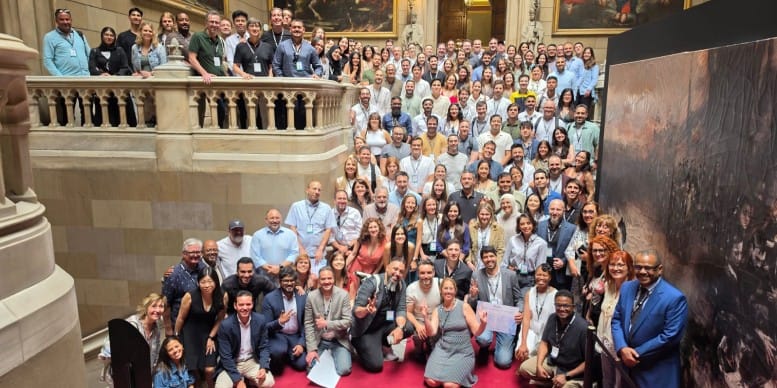
ZIGURAT Institute of Technology has held a new edition of ZIGURAT Student Week from 16 to 19 June, bringing together around 150 students from this year’s cohort, representing 44 countries, in Barcelona. Over four days, the city has become an international meeting point for architecture, engineering and construction students, with an agenda designed to connect learning, industry, innovation and community.
International talks and meetings
The week began with the institutional welcome, the distribution of materials and an initial networking activity among participants. The day also included a gamified walking tour of Barcelona, in Spanish and English, designed to help students discover the city from an architectural, urban and historical perspective, while also starting to work in teams and build connections with classmates from different countries.
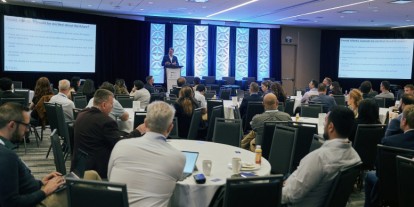
Wednesday was focused on academic learning and collaboration. In the morning, students had the opportunity to attend an extensive programme of talks in Spanish, English and Portuguese, delivered by ZIGURAT lecturers and programme directors, including Juan Ramon Mena, Juan Felipe Pons, Carles Romea, Bruno Mota, Washington Luke, Rogerio Lima, Vicki Reynolds, Lilian Ho, Carlos Coya, Diego Besada, James Daniel, Chris Dymond, Guillermo Corral, Ítalo Guedes and James Basha..
The talks addressed some of the main trends shaping the AECO sector, including artificial intelligence, BIM, Lean Construction, digital transformation, infrastructure, Smart Cities, structures and MEP. Some of them, such as Carles Romea’s session, used Barcelona’s architecture as a starting point. More specifically, Romea explored the similarities between the Sagrada Família and Roman and classical architecture, during a particularly symbolic week for the city following the commemoration of the centenary of Antoni Gaudí’s death and the blessing and inauguration of the Tower of Jesus Christ at the Barcelona basilica.
In the afternoon, students took part in the workshop-challenge “Barcelona of the Future”, a collaborative activity in which teams developed proposals linked to the city’s urban and construction challenges. In this case, 22@ Network Barcelona took part as a member of the jury responsible for assessing the projects developed during the activity, further strengthening the connection between the academic experience and Barcelona’s urban and innovation ecosystem.
Summit and company visits
On Thursday, Student Week included the ZIGURAT Summit 2026 as part of its programme, held at Valkiria Hub under the theme The Barcelona construction blueprint: from construction legacy to global challenges. The event brought together students, professionals and sector representatives to reflect on the major challenges facing construction, architecture and engineering in a context marked by digitalisation, sustainability and the global transformation of the built environment.
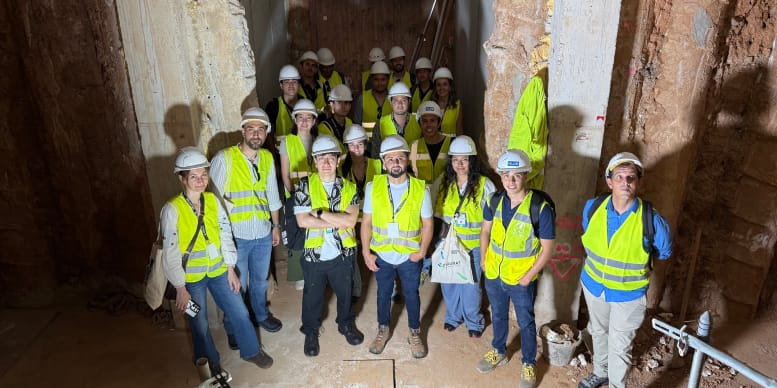
That same afternoon, participants travelled to different parts of the city for professional visits to companies and reference spaces, organised by groups and linked to the areas of specialisation of their programmes. The agenda included a site visit to Torre Diagonal 720 with Thinkin Lean, guided by Juan Felipe Pons, where students were able to learn about the organisation and planning of the project, with particular attention to the implementation of the Lean system and collaborative work in the Big Room. They also visited the Ronda de Dalt covering project with Vilor, where they learned about the different stages of a project developed using BIM methodology; the offices of Bryden Wood, to gain insight into the workings of an international practice and its design and delivery processes; and MediaPro’s Virtual Production Studio, one of the most advanced in Europe, in an activity linked to technological and audiovisual innovation. In addition, the day included a cultural visit to CaixaForum Barcelona, the former Casaramona factory and one of the most emblematic buildings of Catalan industrial modernism.
Closing ceremony at the University of Barcelona
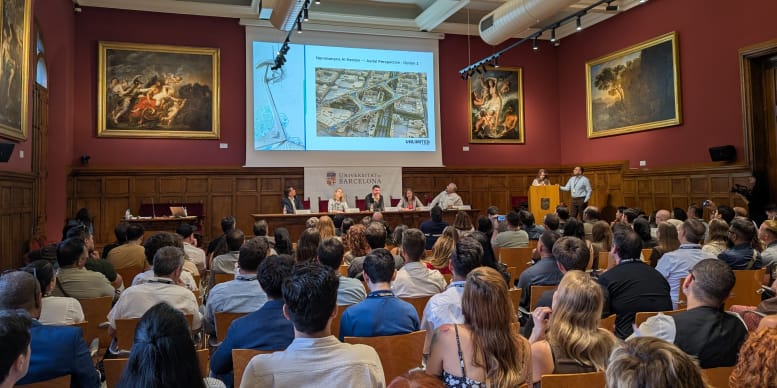
The closing ceremony of Student Week 2026, held as usual in the cloister of the University of Barcelona, has been one of the most emotional moments of the week. During the event, the finalist projects of the Barcelona of the Future Challenge were presented to a jury made up of Pau F. Aldomà, CEO of ZIGURAT; Vicki Reynolds, director of the Master’s in Global BIM Management; Chris Dymond, director of the Master’s in Global Smart City Management; and Isabel Sabadí, director of 22@ Network Barcelona.
Following the jury’s deliberation, the awards were presented to the two best projects developed during Wednesday’s workshop: Pulsa and The Breathing Square. Both projects reflected the international nature of Student Week, with teams made up of students of different nationalities working together to imagine urban solutions for the Barcelona of the future from a global and multicultural perspective.
The Pulsa project, developed by Daniel Slenker, Daniel Veludo, Maria Valdez, Mariana Ferreira, Sara Rodesky, Sergio Rosenboim and Thamires Souza, brought together talent from Hungary, Portugal, the Philippines and Brazil. The proposal imagined a Barcelona in 2070 capable of reducing air pollution and energy consumption through energy-generating pavements, an IoT sensor network and a rewards app designed to encourage citizen participation.
The Breathing Square, presented by Maged Elhamady, Khaled Saidani, Sarah Sakr, Baraa Oudah, Ahmed Hamdy and Cesare Della Corte, brought together students from Egypt, Tunisia, Saudi Arabia and Italy. The project proposed a climate-adaptive transformation of Plaça de Catalunya, reducing traffic, prioritising pedestrians, bicycles and autonomous mobility, and incorporating sponge streets, plant-based shade, permeable pavements, rain gardens and water reuse systems to turn this central Barcelona space into a more liveable, resilient environment, prepared for extreme heat.
The closing day also served to take stock of the experience, recognise the teams’ work and conclude a week marked by international collaboration, applied learning and the connection between ZIGURAT, its students and the professional ecosystem. As the final activity, the commemorative video marking ZIGURAT’s 25th anniversary was screened and, afterwards, attendees enjoyed an aperitif in the historic building of the University of Barcelona.
With this new edition, ZIGURAT has strengthened Student Week as a key experience within its educational model: an in-person, global and multidisciplinary space that allows students to bring online learning into direct contact with the city, industry and an international community of professionals called to transform the future of the AECO sector.