Understanding ISO 19650: Guide for BIM Management in Construction
Categories

Article updated on 10 September 2026.
The benefits of Building Information Modeling (BIM) include improved project visualisation, collaboration and efficiency.
Central to successful BIM implementation are standardised processes that ensure consistency and reliability.
The ISO 19650 series provides a common framework for managing information throughout the life cycle of built assets using BIM. It supports consistent processes, clearer responsibilities and reliable information exchange across project and asset teams. This article explains its structure, benefits and practical application in construction projects.
What is ISO 19650?
ISO 19650 is a series of international standards for managing information throughout the life cycle of a built asset using BIM. Developed from the UK’s BS 1192 and PAS 1192 frameworks, it provides a common approach that can be adapted to projects and assets of different scales and procurement models.
The series aims to ensure that the right information is produced and made available to the right people at the right time, with clear requirements, responsibilities and approval processes.
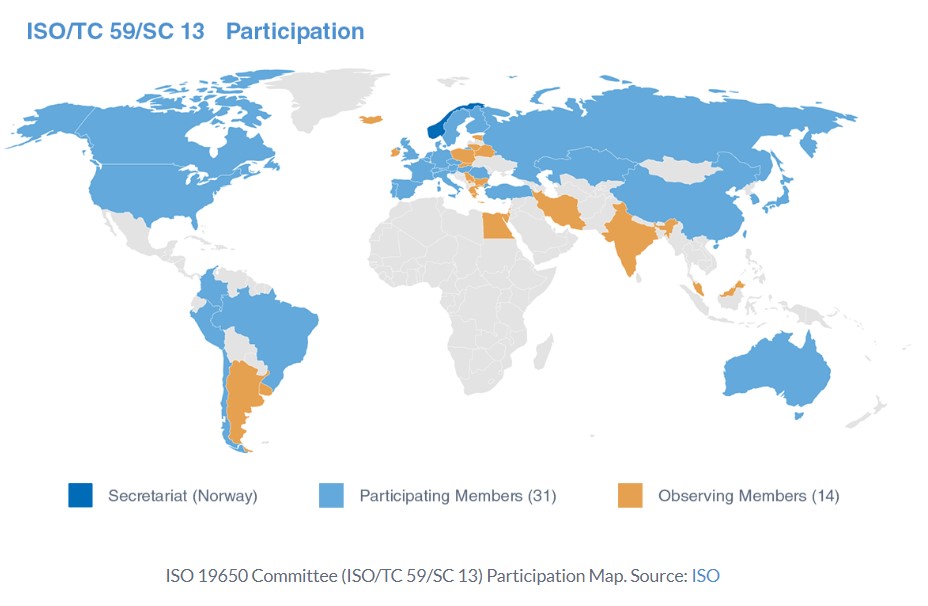
Standards status (September 2026): ISO 19650 Parts 1, 2 and 3 are currently under revision. The published editions described below remain current until ISO formally issues their replacements.
The Structure of ISO 19650
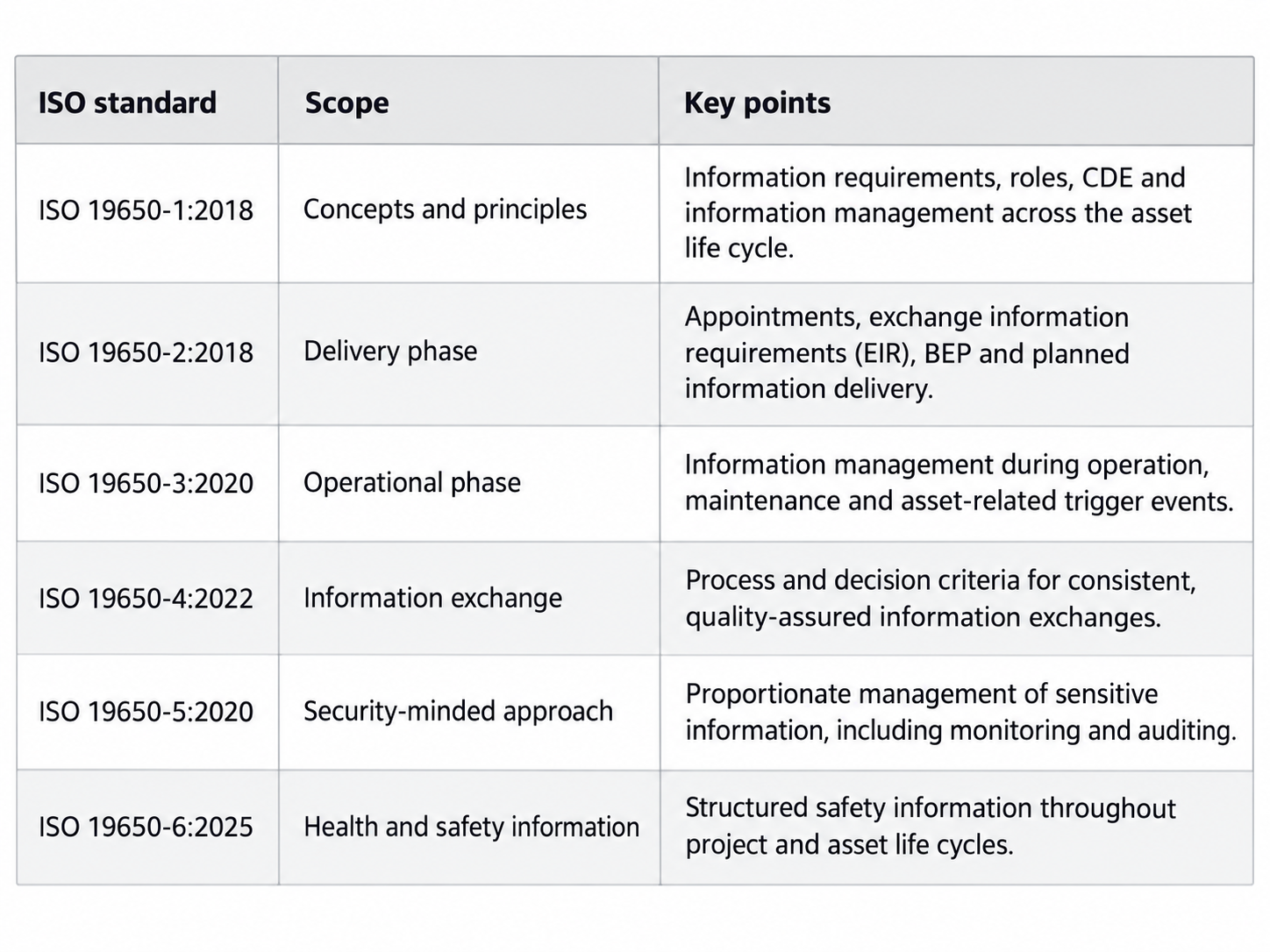
ISO 19650 is divided into several parts, each addressing different aspects of information management:
ISO 19650-1: Concepts and Principles
Objective:Provides an overview of the concepts and principles for managing information using BIM within the context of ISO 19650.
Key Points:
- Establishes the general principles of information management during the asset’s lifecycle.
- Defines the key terms and concepts used in the series.
- Provides a framework for information management, emphasising the importance of collaboration, structured information, and clear information requirements.
- Introduces the common data environment (CDE), which combines agreed workflows with the technical solutions used to collect, manage, review and share information.
ISO 19650-2: Delivery Phase of the Assets
Objective:Focuses on the management of information during the delivery phase of assets.
Key Points:
- Details the processes and procedures for information management during the project delivery phase.
- Explains how the appointing party defines exchange information requirements (EIR) for each appointment, informed by the relevant project and asset information requirements.
- Explains the roles and responsibilities of parties involved in information management.
- Provides guidelines for developing information models, ensuring data quality, and managing the exchange of information.
ISO 19650-3: Operational Phase of the Assets
Objective: Addresses information management requirements during the operational phase of assets.
Key Points:
- Focuses on the processes and procedures for managing information after the asset is delivered and in use.
- Covers aspects such as maintenance, asset management, and operations.
- Emphasises the need for up-to-date and accurate information to support the efficient operation and maintenance of assets.
- Highlights the importance of integrating information management into the overall asset management strategy.
ISO 19650-4: Information Exchange
Objective: Specifies the detailed process and decision criteria for executing information exchanges and assuring the quality of the resulting project information model (PIM) or asset information model (AIM).
Key Points:
- Applies to information exchanges during both project delivery and asset operation.
- Establishes criteria for reviewing information and deciding whether it is ready to be shared or accepted.
- Supports consistent and traceable exchanges, applied proportionately to the scale and complexity of the asset.
ISO 19650-5: Security-minded Approach to Information Management
Objective: Establishes principles and requirements for a security-minded approach to managing sensitive information throughout the life cycle of an initiative, project, asset, product or service.
Key Points:
- Helps organisations determine whether information is sensitive and manage the associated risks proportionately.
- Supports the protection of commercial information, personal information and intellectual property.
- Embeds security responsibilities and an appropriate security culture throughout the information management process.
- Includes the monitoring and auditing of compliance.
ISO 19650-6: Health and Safety Information
Objective: Defines how structured health and safety information should be classified, shared and delivered collaboratively throughout project and asset life cycles.
Key Points:
- Supports the progressive digitisation of health and safety information from the outset of a project.
- Provides a framework for identifying, managing and sharing information about hazards and risks.
- Helps ensure that clear and relevant safety information reaches the right people at the right time.
- Applies across procurement, design, construction, operation, maintenance and end-of-life activities, including phases that do not use BIM
Benefits of ISO 19650 in BIM Management
Adopting ISO 19650 offers several significant advantages for BIM management in construction projects:
Improved Collaboration and Communication
- ISO 19650 fosters better collaboration among project stakeholders by standardising information management practices. This ensures that all parties have access to accurate and up-to-date information, reducing misunderstandings and errors.
Enhanced Information Management
- The standard promotes a structured approach to information handling, ensuring that data is consistently organised, stored, and retrieved. This leads to more efficient project workflows and decision-making processes.
Increased Efficiency and Reduced Errors
- By providing clear guidelines and standardised procedures, ISO 19650 helps minimise rework and errors. This leads to cost savings and shorter project timelines.
How to Implement ISO 19650 in Construction Projects
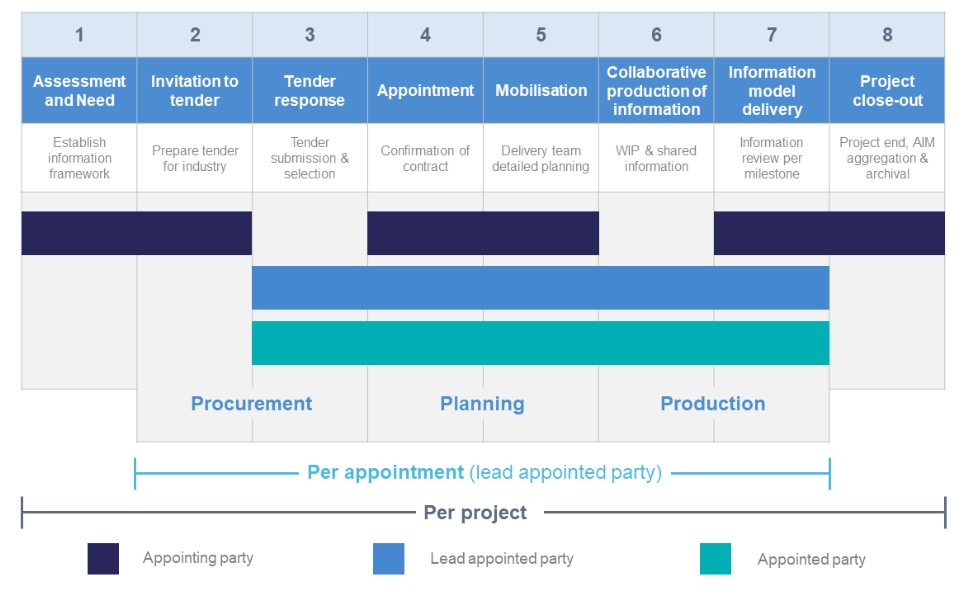
Implementing ISO 19650 is not simply a matter of adopting a software platform or applying a file-naming convention. It requires clear information requirements, defined responsibilities, agreed workflows and planned information exchanges. The process should be applied proportionately to the scale and complexity of the project or asset.
- Assess current information management practices. Review existing roles, workflows, standards and technology to identify gaps against the ISO 19650 process.
- Define the information requirements. Organisational information requirements (OIR) express business needs; asset information requirements (AIR) support asset operation; and project information requirements (PIR) support project delivery. These inform the exchange information requirements (EIR) established for each appointment.
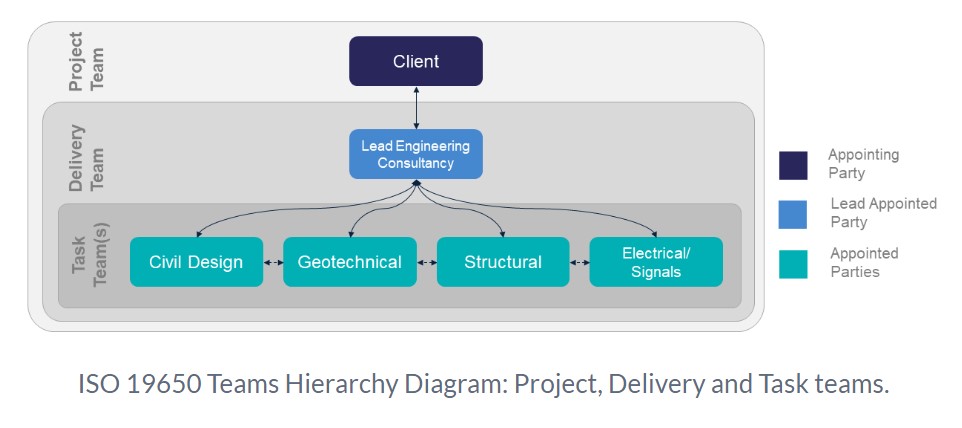
- Assign information management responsibilities. Clarify the responsibilities of the appointing party, lead appointed party and appointed parties. Define who produces, checks, reviews, authorises and accepts each information deliverable.
- Agree the BIM execution and delivery plans. The lead appointed party sets out the proposed information management approach in the BIM execution plan (BEP). Task teams prepare task information delivery plans (TIDPs), which are coordinated in the master information delivery plan (MIDP).
- Establish and test the CDE. Agree the workflows, metadata, permissions and technical solutions used to manage information through the Work in Progress, Shared, Published and Archive states. Project teams should be trained before information production begins.
- Produce, review and authorise information. Task teams create and check their information before sharing it. The lead appointed party then reviews and authorises the coordinated information model for exchange.
- Exchange, accept and archive information. The appointing party assesses each delivery against the EIR and either accepts or rejects it. Accepted information is incorporated into the relevant project or asset information model, while records and lessons learned are retained for future use.
Applying ISO 19650 in Professional Practice
Applying ISO 19650 effectively depends less on a particular software platform than on clear information requirements, defined responsibilities and reliable decision-making processes. When these elements are aligned, project teams can improve traceability, reduce rework and avoid common BIM implementation mistakes.
This broader approach is central to global BIM management, integrating information governance, multidisciplinary collaboration and project delivery across the asset life cycle.

Related module

Master’s in Global BIM Management
English
1 academic year